

and Independent Probing

 Professor Wu's Brief Biography /
Research Overview
Professor Wu's Brief Biography /
Research Overview
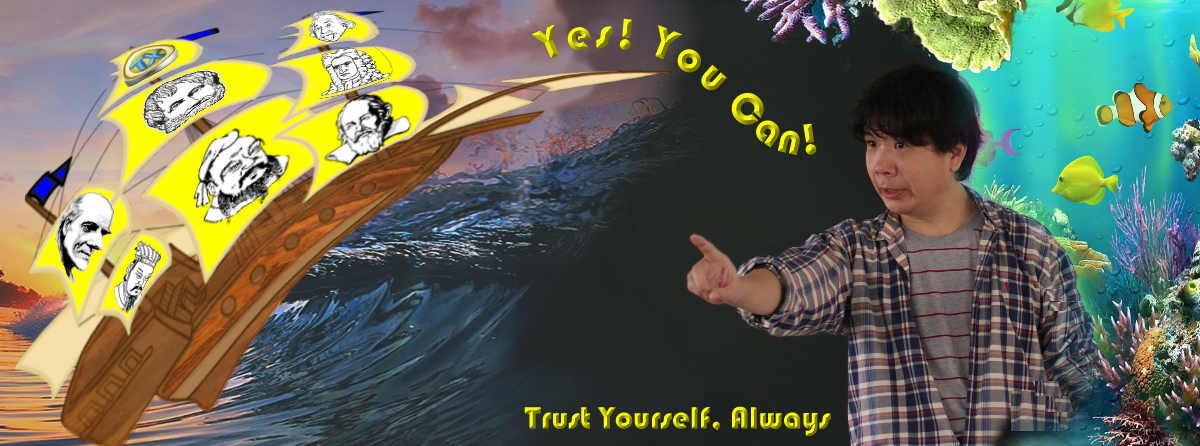
Sean TX Wu and TX Community: A Nexus for Interdisciplinary Learning & Independent Probing

The TX Community
is a bilingual (Chinese and English) academic website focused on exploring
new theories and quantitative methods for understanding human behavior,
specifically termed "The Third Knowledge."
The TX Community has
achieved over 3,000 global top-ranking keywords on Google. It is the only
individual online community in the world to have reached this milestone.
The TX Community's participating team is the "Management Behavioral
Research • Cross-University Alliance Laboratory." Core themes include:
"Adoption Modeling (International Research)," "Behavioral Research / The Third Knowledge," "Information Management," "E-commerce," "Electoral
Behavior," "Online Education," and "Digital Content / Internet /
Audio-Visual Cultural Content." This site advocates for "Interdisciplinary Learning"
in its teaching philosophy, guiding transnational and cross-university
students to construct a virtual integrated campus for the "University Youth
Online Magazine." It provides industry-academia collaboration services and
welcomes exchanges on topics related to the development of online
communities.
Professor Wu's greatest hope for sharing is "learn more,
question independently." He suggests that learning should not be confined by
educational systems, nor should it be driven by examinations or short-term
utilitarian goals. Learning more is not a burden; rather, it broadens the
base of one's knowledge pyramid, allowing one to enjoy the pleasure of
climbing upwards.
Educational Tracking Divides Professions, Not Human Nature
This philosophy, in essence, revives the ideals of
"Interdisciplinary Learning" found in Confucius's Apricot Altar and the Greek
Academy. The rise of specialized education in modern times has led to a
system of "streaming and compartmentalization" and a societal reality of
"two cultures," constraining young people into either science/engineering or
humanities types, thereby losing confidence in balanced development.
Professor Wu wishes to remind us: academic "tracking" is for
classifying "professions," not for classifying "human nature." While diverse
development may not guarantee great wealth, it can restore the
human-centered joy of life.
Professor Wu is a theorist, experimenter and
practitioner of this philosophy. He was educated in Taiwan and taught
graduate school in the United States. In an era without convenient Chinese
computing, he invented an intelligent Chinese processing system. During a
period of political authoritarianism, he pioneered public opinion polling.
At a time when culture was becoming subservient, he was among the first to
participate in the "Campus Folk Song Movement" as a composer and performer,
and was the executive producer of the first "rebellious" record. Amidst the
prevailing belief of "Come, come to NTU; go, go to America," he was one of
the few classmates who resolved to stay in Taiwan and serve as a "screw" (a
small
dedicated contributor to homeland). In today's world, where research in human and social
behavior is still fraught with uncertainties, he calls on us not to
underestimate our potential and ability to construct historical scientific
paradigms. His learning and works, in addition to mathematics-based and
digital aesthetics-applied themes, also include humanities learning such as
current affairs commentary, literary creation, music and opera, and English
language and American culture teaching.
Diligence Overcomes Weakness; Insight Through Interconnectedness
Professor Wu
enjoys learning, having studied at National Taiwan University and Chien Kuo
High School, and taught at Georgia Tech's System Engineering department,
which is ranked first (and possibly world-first) in applied statistics. He
has met many exceptionally intelligent people. Therefore, he knows that in
terms of intelligence, he can at best be considered above average. If
"memory" is also counted as a factor of intelligence, he might even rank
below average. However, he believes in "Diligence Overcomes Weakness: and
works hard to
compensate for lack of talent, "getting to the bottom of things," and
"not being constrained by image-driven approaches." This is how he
discovered the phenomenon of the "Knowledge Spectrum": to deeply answer a
question in field A, one might need to draw upon knowledge from field B, or
even field C. This continuously sparked his interest in learning, enabled
him to recognize the true meaning of "Insight Through Interconnectedness"
(觸類旁通), and made him realize that many current textbooks and educational
systems might restrict our quest for knowledge to an extremely narrow
"framed knowledge."
He has documented his learning interests and
experimental results. In the current intellectual framework of "learning
streaming and singular development," these might not be easily recognized or
even misunderstood. However, he is sharing the practice of
"interdisciplinary learning and development." If you are willing to
understand, it might prove that ordinary people like you and me have the
potential to attempt learning in many different areas.
Following the Crowd Is Easy; Standing by Evidence Is Hard
Professor Wu likes to ask "Why?" This also reflects his pursuit of
"independent personality": upholding the philosophies of "skepticism" and
"empiricism" to cultivate a taste for rationality. "Independent judgment" is
easier said than done. Humanity's first cognitive reflex is often to follow
authority and blindly conform to famous figures.
He often conducts a
simple experiment, asking: "Does the sun revolve around the Earth, or does
the Earth revolve around the sun?" Everyone can answer. But then he asks:
"Why? Where is the evidence?" Few can answer, mostly relying on "the book
says, the celebrity says, everyone says," presenting only conclusions
without reasons. This reflects that many modern people hold beliefs
diametrically opposed to 16th-century human cognition, yet the nature and
method of cognition remain identical: many follow, few are independent—this
also corroborates his observations on human behavioral patterns.
As
the historically proven "paradigm theory" suggests, the deeper the
knowledge, the fewer people truly research it. Most people rely on the
opinions of a very small number of individuals. These few individuals
sometimes possess profound and accurate insights. However, there are also
many times when they merely hold resources and advantageous positions, and
are not necessarily correct. This applies not only to "hard" knowledge but
also to softer, lifestyle examples. The more refined the taste, such as in
art or even luxury goods, many people base their choices on "brands" rather
than their own independent appreciation.
Never Undervalue Yourself; Always Question Yourself
Explorers of "Type I Knowledge"
and "Type II Knowledge" have all struggled against non-recognition. We must
not forget that until the sixteenth century in Europe, the power to
interpret cosmic knowledge was still held by the Church. Compared to the
five-hundred-year history of physical science's struggle to break free from
the shackles of the Church, modern human and social behavioral research is
only one-tenth as old. We must not underestimate our potential and ability
to construct historical scientific paradigms in the future. Knowledge is
endless and still awaits independent pursuit. We should constantly remind
ourselves, challenge ourselves, and question ourselves.
As an
educator, Professor Wu advocates for Interdisciplinary Learning through
interdisciplinary learning. In evaluating himself, he insists on an
independent and inquisitive personality in the pursuit of truth.
 Website Address


