



知識光譜科學知識有如光譜,可分3類:「物理-生理-人類行為」知識,因其觀察對象與可預測程度不同,而方向有所區隔。然其間連通之元素,即為計量方法。 本定位乃相對框架知識、分科知識而言。 |
 |
接龍實驗:不同的思想方法統雄能夠提出非等機率事件的計量方法嗎? 邀請您快速的體驗「創新」的學習與實踐。 |
 |
 |
人類認知取用行為小實驗請問:是太陽繞地球轉?還是地球繞太陽轉? 請再問:為什麼? Galileo的證據在那裡?
你會發現:每個人都知道是地球繞太陽轉,但絕大多數人都不知道理由是什麼。 這個現象就是「TX取用模式」:人靠「社會相信」取用為多,靠證據取用為少。 現代人和16世紀的人類認知內容結論相反,但認知的本質與方式仍然完全相同。 人類的結構性認知取用行為,不因時間、地域而不同,所以人類行為是可以預測的。 多數人是靠「社會相信」:教科書上說、有名人說、大家說。 少數人是靠「理性抉擇」:收集證據、分析證據、比較證據。 在臨界點-Galileo被認同之前:他的知識是「潛移默化」的,只有極少數人有興趣。 在臨界點-Galileo被認同之後:他的知識變成「集體行為」,多數人並不知道其內涵,但卻當成背誦與信仰。
為什麼個體之間有以上差別: 個人對取用物之需求、興趣的交互作用。 社會資源分配:改變、與維持力量的抗衡。 |
Features of This Site
This site proposes the concept of a Rainbow Spectrum of Knowledge, suggesting that in addition to "Type I: Physical Knowledge" and "Type II: Physiological Knowledge," a "Type III: Behavioral Knowledge" is needed. While these three types differ in their orientation, they are interconnected by "Quantitative Thought and Quantitative Methods," forming a complete, rainbow-like spectrum of knowledge.
What is Scientific Knowledge?
This site defines "scientific knowledge" as possessing two realms:
•
First Realm: Theories that are predictable (including measurable) and empirically verifiable repeatedly.
•
Second Realm: Theories that can be controlled, or (for humans) can exert a subtle, pervasive influence.
Based on this definition, current research in management science concerning human behavior, and various peripheral humanities and social studies, though often labeled as scientific, have not yet fully achieved the status of scientific knowledge. The ideas and methods proposed on this site have the potential to elevate "behavioral research" to scientific knowledge.
Current So-Called Humanities and Social Sciences
Without resorting to pedantry, it is evident that if one opens a physics textbook and follows its instructions, most predictions can be made and empirically verified. Opening a biology textbook yields a considerably high proportion of predictions and verifications for more than half of its content. However, for textbooks on human behavior—be it economics, management, politics, or aesthetics—the proportion of predictable and verifiable content appears to be quite low.
Nevertheless, in the current (or perhaps inherently human) educational ecosystem, "knowledge" is often treated as something to be memorized rather than practiced. This is particularly true in the humanities and social sciences, necessitating a re-understanding of the essence of "knowledge."
The generation of knowledge should be based on sound epistemology and methodology.
The Spectrum of Knowledge
Types of knowledge resemble a rainbow spectrum, roughly divisible into three distinct yet interconnected blocks, or three types of knowledge.
Their differences lie in the nature of the observed objects, the quantitative tools used, and the predictive efficacy achievable by these tools. Their interconnectedness stems from the inherent continuity of quantitative tools at a fundamental level.
To the far left is generally experienced physical knowledge, which is causal. The observed objects invariably possess "Reflexive Property of Equality" and "Addibility." Using highly effective, narrowly defined Euclidean-Newtonian mathematics as a quantitative tool, it can achieve "point prediction." Professor Wu suggests this be named Type I Knowledge.
In the middle is physiological knowledge, which also includes probabilistic knowledge of high-energy phenomena. Observed objects exhibit "equal probability" and "normal distribution" properties. Inferential statistics (not descriptive statistics) are used as quantitative tools to achieve "interval prediction." Although inferential statistics are based on calculus, their interpretation of observed and measured numbers is profoundly different. Professor Wu suggests these be considered distinct thought processes and knowledge types, named Type II Knowledge.
The Two Cultures
However, in current general societal cognition, these two types are often merged into natural scientific knowledge, contrasting with human behavioral knowledge on the right side of the spectrum.
Human behavioral knowledge, positioned further to the right, despite being labeled as humanities and social sciences, still lacks widely accepted "fundamental laws" (such as Newton's laws of mechanics, or Watson's DNA theory and Sanger's sequencing methods). Many thinkers even doubt the existence of this spectrum. Plato once explained science and humanities as two separate circles, with the left representing Truth and the right representing Belief, and only their intersection yielding Knowledge. Snow's observation further argued that these two circles have no intersection, existing as distinct "two cultures" at opposite poles.
This "two cultures" phenomenon is particularly evident within the academic community of current "humanities and social sciences." One faction completely avoids numbers; the other uses quantitative methods, or broadly, behavioral research methods.
However, current behavioral quantitative research, in its theoretical model construction and quantitative methods, almost entirely relies on tools developed from Type I and Type II knowledge, which may not align with the fundamental nature of behavioral knowledge.
For instance, many behavioral studies are explicitly or implicitly built upon "stimulus-response theory" and "rational choice theory." Yet, Professor Wu's long-term empirical observations suggest these are not universally applicable facts. Furthermore, many renowned quantitative methods in behavioral research, such as the fundamental "exponential growth model" (Y=Ce^βt) used to predict economic prosperity, upon closer examination, reveal that the environmental variable 'e' (i.e., whether it will grow exponentially with the natural logarithm as its base) is controllable and exists in physical environments like temperature. However, its existence in human society is highly questionable. We frequently hear of governments "revising" economic forecasts. If these were truly scientific knowledge with predictive power, such frequent "revisions" would not occur. A "revision" implies an adjustment based on recent phenomena, and the occurrence of recent phenomena reflects that the "prior prediction" was, in fact, devoid of predictive power. That is, many behavioral quantitative models are merely "descriptive statistical records" of past events, lacking true forward-looking predictive capability.
For further discussion, please refer to "Reflections on the Fundamental Ideas of Human Behavior."
Moreover, despite the efforts of so many advanced intellects, a satisfactory paradigm has yet to be found. If we continue to follow the same direction, it might be in vain. We may need the courage to explore the possibility of "different thought processes."
Exploration and Experimental Examples of Type III Knowledge
Therefore, Professor Wu's international research team proposes that the exploration of human behavior—more precisely defined as "human adoption behavior"—should constitute Type III Knowledge. This knowledge possesses "non-equal probability" and "S-shaped growth curve" characteristics. Utilizing Professor Wu's developing "TX Adoption Model" and "Type III Behavioral Quantitative Method (Behaviometrika) – Dynamic, Quasi-Hyperbolic Probabilistic Projection Analysis" as quantitative tools, it can achieve "type and trend prediction."
This team has also demonstrated, through several easily understandable experiments, that problems generally considered "impossible" can be solved using different thought processes and quantitative methods.
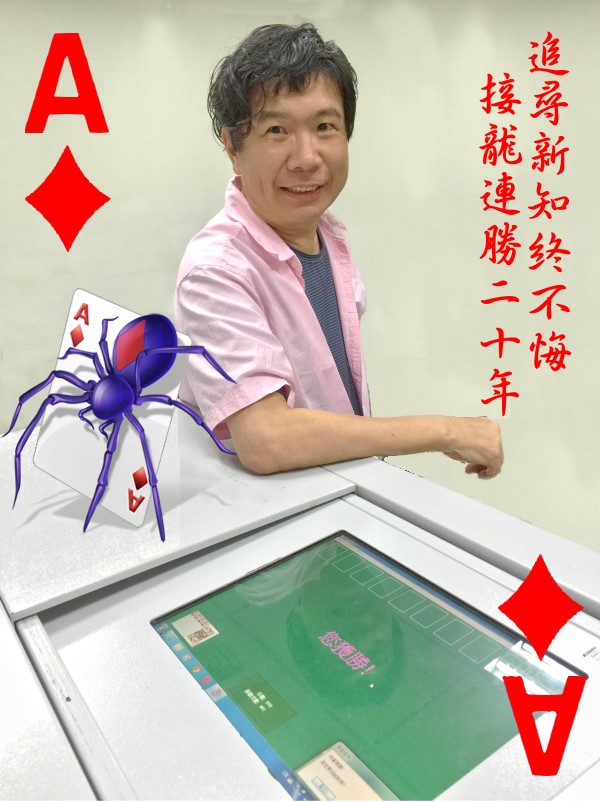
Solitaire Experiment: A Non-Equal Probability Quantitative System
Taking "Spider Solitaire" as an example: with a total of 4 suits, 8 decks, and 104 playing cards, predicting how to complete the sorting when only 10 cards are known and the rest are unknown. Professor Wu's team is the only one globally to have empirically achieved this goal, having demonstrated it at universities such as Shih Hsin, National Taiwan University, and National Tsing Hua University. Invitations for live demonstrations from other institutions are welcome.
While solutions for some "non-equal probability" problems have existed in the past, such as one-way chi-square, Bayesian analysis, and Markov chains, their problem-solving capabilities have been very limited, subjective, and unable to demonstrate "repeated empirical verification."
The Solitaire Experiment showcases a "4-parameter, non-equal probability theory" (relative to the general 3-parameter probability theory) and over 20 years of accumulated "repeated empirical verification." This represents the first "non-equal probability quantitative system" in history to provide such evidence.
Google Ranking Experiment: Type III Behavioral Quantitative Method and Subtle Influence
By analyzing online user behavior with the "Type III Behavioral Quantitative Method (Behaviometrika)," this research has fostered an "S-shaped growth curve" in click-through behavior. As a result, this website, unconstrained by cultural or linguistic barriers, has achieved global top rankings on Google for both English and Chinese keywords, exceeding 3,000 keywords at one point, with over 800 simultaneously ranking, including a #1 ranking among billions of pages! This makes it the only individual website in the world to achieve such a feat. These results have been demonstrated at universities including Shih Hsin, National Taiwan University, National Chengchi University, National Tsing Hua University, and Tunghai University.
This experiment further proves that behavioral research, including various non-equal probability events, can not only satisfy the first realm of scientific knowledge but also achieve the second realm of subtle influence on global human adoption behavior.
However, this is foundational knowledge research, and few globally are contemplating such problems. Moreover, the history of science demonstrates that the general public finds it easier to believe in "evolutionary knowledge" than to understand "revolutionary knowledge."
This research may need to seek opportunities for commercial models to gain broader societal recognition.
|
 測量Measurement
 第3類知識簡介
第3類知識源起
第3類知識基礎建構
第3類知識進階建構
TX取用模式的應用
知識探險的光明與黑暗
「因果-機率-TX取用模式」知識之別
「不同的知識」須使用「不同的計量工具」
框架知識
紫竹林網路群組:
The alias of this site, Purple Woo, is a legacy spanning three decades. Originally conceived as a digital 'cove' (塢, Wu), it draws inspiration from the Purple Bamboo Woo, the sacred dwelling of Guan Shih Yin, the Goddess of Wisdom, who possesses the methodology to alleviate human suffering.
In contemporary English, 'woo' is often used as a slang term for fringe beliefs. However, we embrace this linguistic tension. Here, Woo represents the tireless 'wooing' of truth through rigorous evidence—a sanctuary for interdisciplinary insight. As history proves, yesterday's 'woo'—much like Galileo's once-heretical visions—frequently becomes tomorrow's foundational truth.


